Oct 10, 2026
Oct 10, 2026
Oct 09, 2026
Oct 09, 2026
Sep 16, 2026
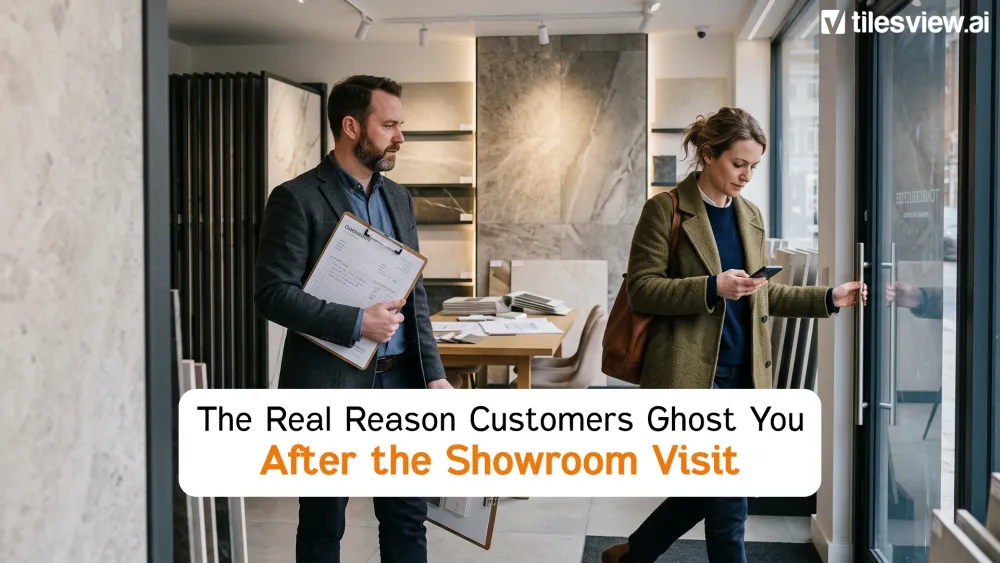
A customer spends an hour in your tile showroom.
They compare finishes, photograph displays, ask about prices, and take several samples home.
The conversation feels promising.
Then nothing happens.
No callback. No sample order. No quote approval. No explanation.
Most showroom teams assume the customer found a lower price somewhere else.
Sometimes that is true.
But often, the real reason is much simpler: the customer still cannot picture the product in their own space.
They did not leave because they disliked your tiles.
They left because they were not confident enough to choose them.
A showroom is designed to inspire.
Customers can touch materials, compare colors, explore finishes, and speak with knowledgeable salespeople. But even the best display cannot fully recreate the customer’s kitchen, bathroom, bedroom, lobby, or commercial project.
A tile may look impressive under showroom lighting and still feel risky once the customer imagines it across an entire floor or wall.
They begin asking themselves:
The showroom visit may create excitement, but unresolved visual uncertainty often follows the customer home.
That is where momentum disappears.
Customers rarely say, “I cannot visualize the final result, so I am delaying my decision.”
Instead, they say:
These responses sound like ordinary sales objections.
But beneath them is often a lack of confidence.
Flooring and tile are not small, reversible purchases. Once installed, changing the decision can be expensive, disruptive, and frustrating.
When customers cannot clearly imagine the outcome, delaying the decision feels safer than making the wrong one.
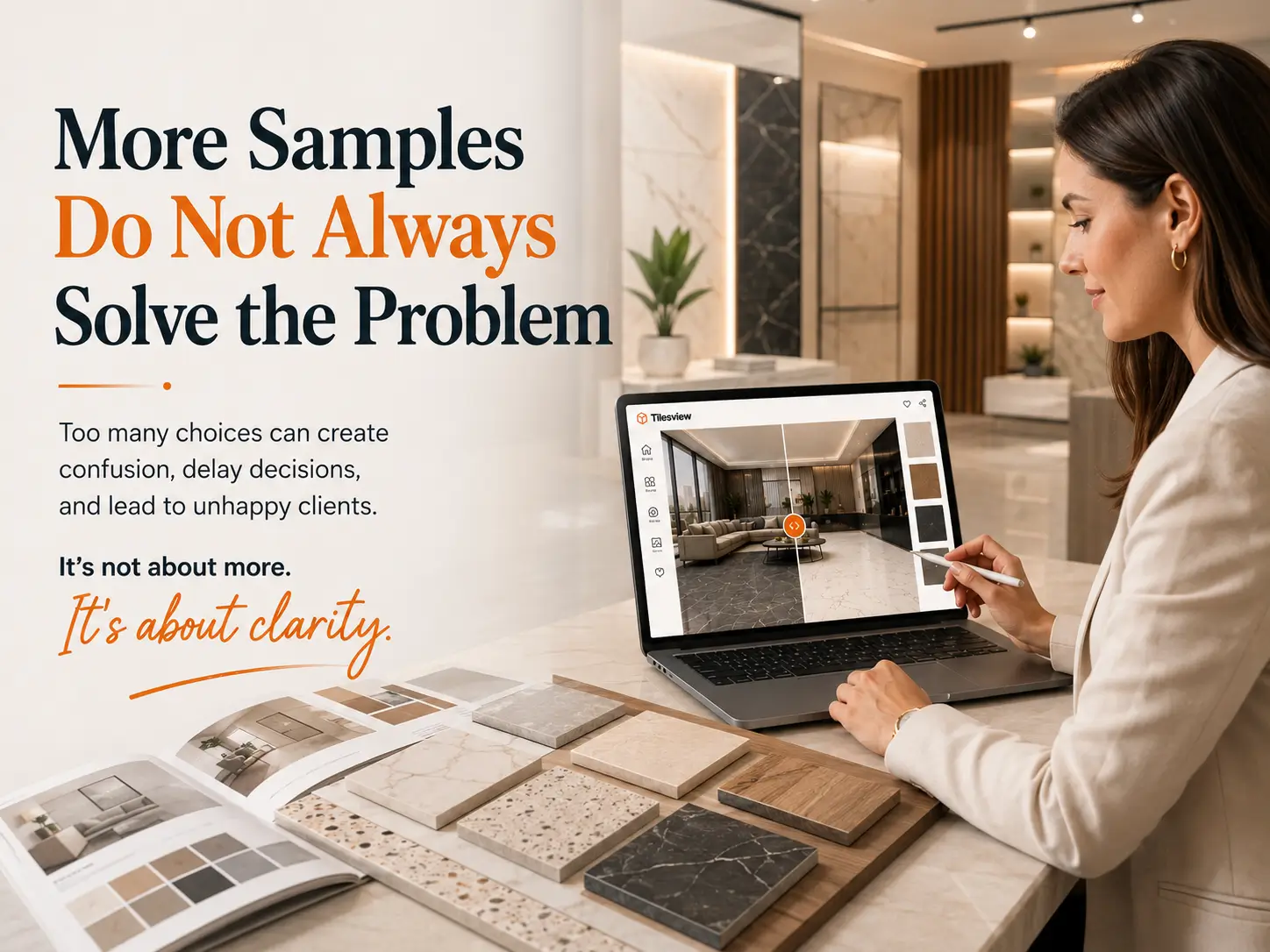
When a customer hesitates, showroom teams often respond by offering more samples.
This can help, but it can also make the decision harder.
A small tile sample shows color, texture, and finish. It does not show:
Giving customers six samples instead of three may increase their options without increasing their confidence.
The problem is not always a lack of choice.
It is often a lack of context.
Once customers leave the showroom, your salesperson is no longer guiding the decision.
The customer begins searching online.
They look at inspiration photos, competitor websites, social media posts, marketplace listings, and other local showrooms. They send product images to family members. They ask contractors and designers for opinions.
Every additional opinion introduces another possibility.
A competitor may not have a better product, but they may present the product more clearly.
They may offer stronger room imagery, easier comparisons, or an interactive tool that helps the customer visualize the result.
At that point, the sale is no longer determined only by product quality or price.
It is determined by which brand gives the customer the clearest path to a confident decision.
Showroom teams frequently try to recover lost customers through follow-up messages:
“Have you made a decision?”
“Would you like an updated quotation?”
“Are you still interested in the collection?”
These messages focus on closing the sale.
But they do not solve the reason the customer stopped moving forward.
A more effective follow-up would help the customer overcome uncertainty.
For example:
“Would you like to see the tile in a photo of your own room?”
“Should we create two design options using the collections you shortlisted?”
“Would you like to compare the lighter and darker finishes in your space?”
This changes the conversation.
Instead of asking the customer to decide, you help them decide.
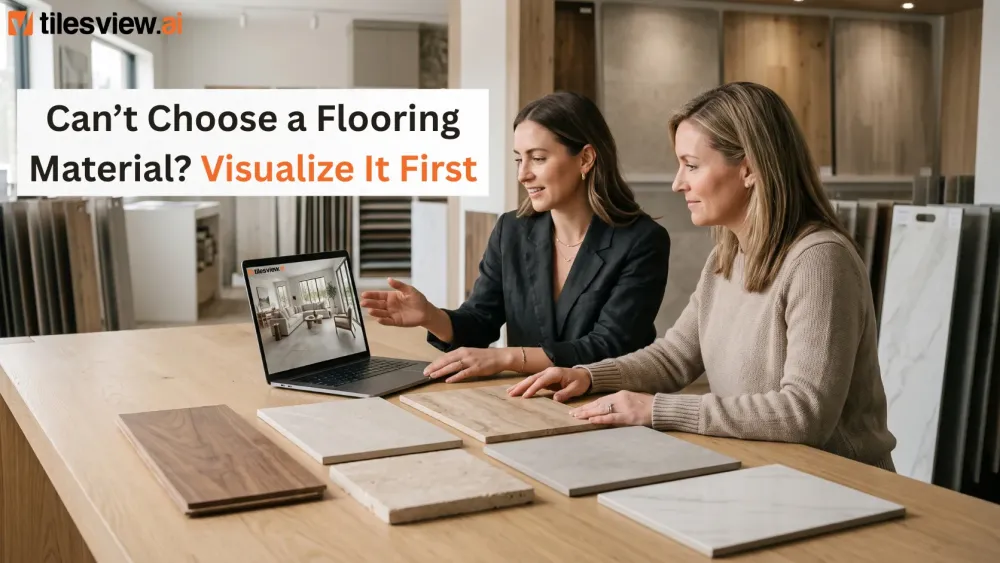
An AI tile visualizer allows customers to see shortlisted products inside a realistic room environment.
They can upload a photo of their own room or explore pre-designed spaces. Within seconds, they can compare different tiles, colors, patterns, and finishes.
This gives them answers that samples and verbal explanations cannot provide.
They can see whether:
Visualization replaces imagination with evidence.
That can be the difference between “We need more time” and “This is the one.”
Generic room scenes are useful for inspiration.
But personal room visualization creates a stronger emotional connection.
When customers see a selected tile inside their own kitchen, bathroom, bedroom, or commercial space, the product stops feeling abstract.
They are no longer evaluating a sample.
They are evaluating a possible future.
This makes the conversation more specific and more productive.
Instead of saying, “I’m not sure about the beige tile,” the customer can say, “The beige works better with the cabinets, but I prefer the larger format.”
That is a much easier sales conversation.
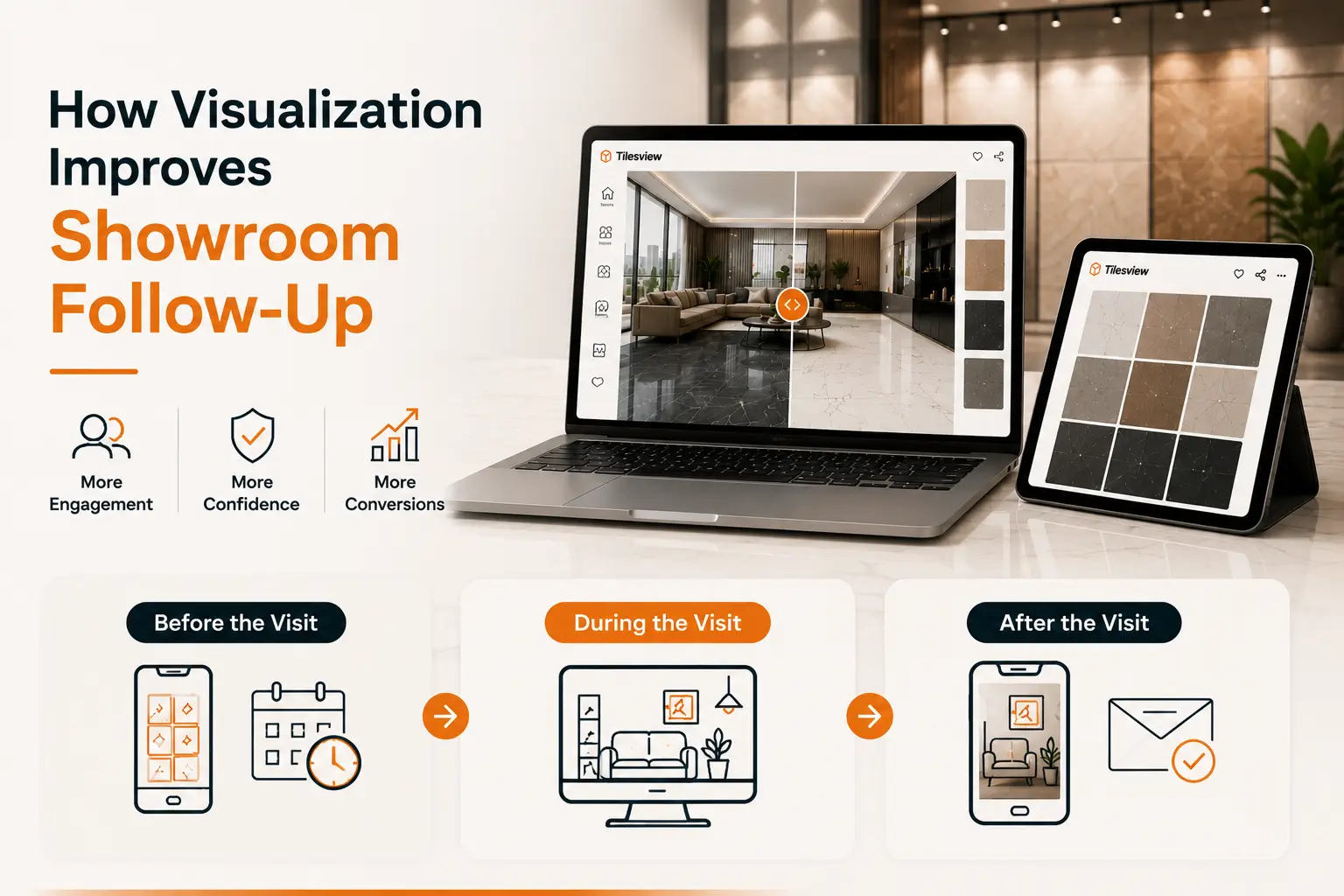
A visualizer can become part of the sales process before, during, and after the showroom visit.
Customers can explore collections online and arrive with a stronger idea of what they like.
Sales teams can place shortlisted products into room scenes and compare options in real time.
The showroom can send personalized visualizations alongside quotations, samples, or follow-up messages.
This creates continuity.
The customer does not leave with only product codes and small samples. They leave with a visual reference that keeps your products connected to their project.
Visualization activity can reveal buying intent.
A customer who uploads a room photo, tries several products, saves designs, or requests a quote after visualizing is showing stronger engagement than someone who briefly browses a catalog.
This can help sales teams identify which leads deserve faster or more personalized follow-up.
Instead of treating every visitor the same, showrooms can focus on the customers actively moving toward a decision.
When customers disappear after a showroom visit, the impact goes beyond one lost sale.
The showroom has already invested in:
If the customer leaves without enough confidence to continue, much of that investment is wasted.
Improving conversion does not always require more showroom traffic.
Sometimes it requires helping existing visitors make decisions more easily.
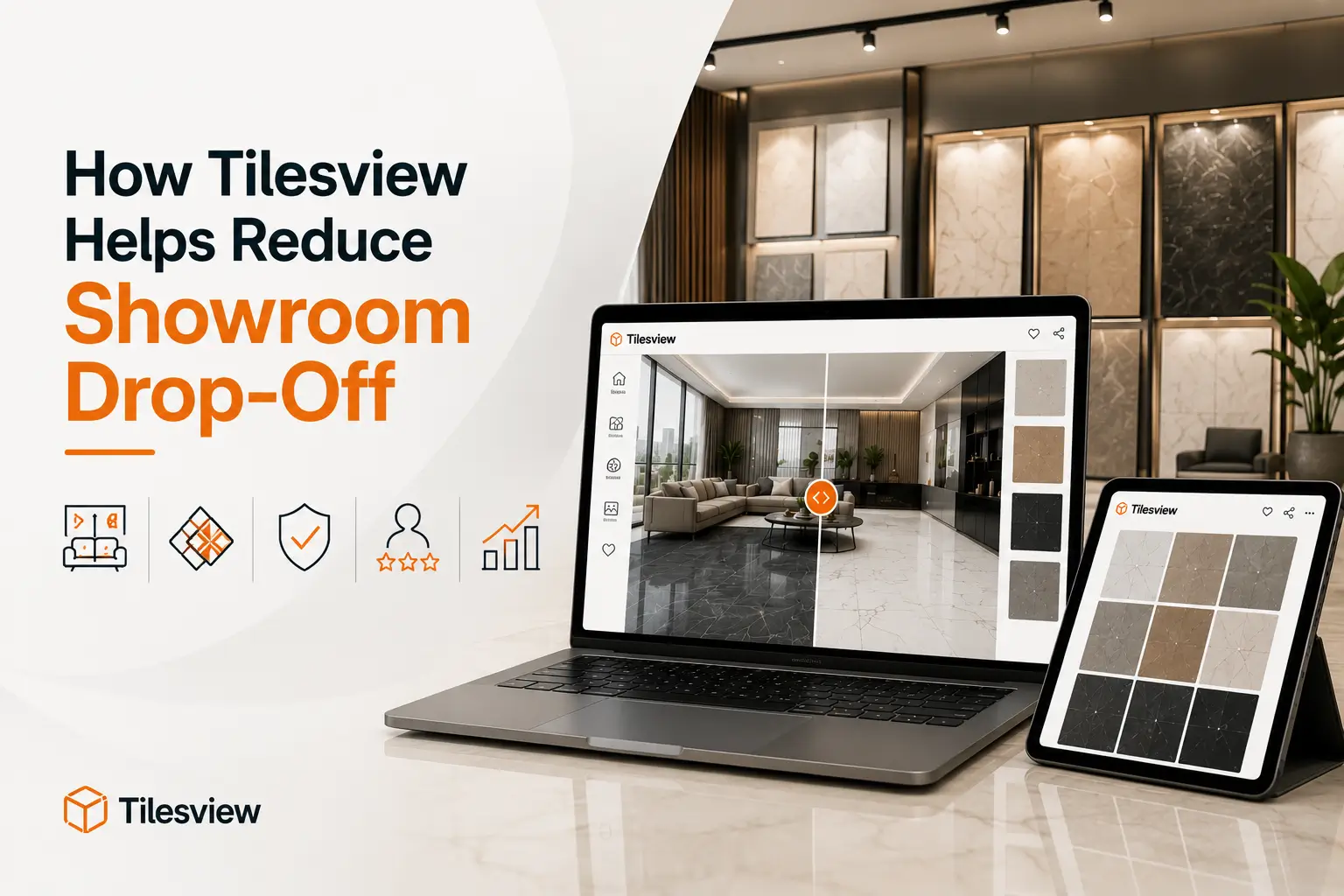
Tilesview helps tile and flooring businesses turn showroom interest into visual confidence.
With AI-powered visualization, customers can preview selected products in realistic rooms or upload photos of their own spaces.
Showroom teams can use Tilesview to:
The goal is not to replace the showroom experience.
It is to extend it.
Tilesview gives customers a way to continue exploring your products after the physical visit, while keeping your brand at the center of the decision.
Customers do not ghost showrooms only because of price.
They disappear because the decision still feels risky, unclear, or difficult.
A beautiful display can attract attention.
A knowledgeable salesperson can build trust.
But visualization provides something equally important: confidence.
When customers can see how a tile may look in their own space, they are more likely to continue the conversation, compare fewer alternatives, and move toward a decision.
The strongest showroom experience does not end when the customer walks out the door.
It continues until they can clearly see the result.
Give customers more than samples and quotations.
Give them a clear picture of what their space could become.
With Tilesview, tile and flooring businesses can create interactive visualization experiences that help customers choose confidently and keep sales moving after the showroom visit.
Help customers see the result before installation, and give them a reason to come back.

Anand Bhoraniya is a technology entrepreneur and visualization innovator at Tilesview, specializing in AI-powered room visualization software for tile, flooring, paint, and wall covering brands. He regularly shares insights on AI visualization trends, virtual showroom experiences, personalized design technology, warm minimalist interiors, and photorealistic room design solutions.
Get the latest insights on room visualizer, interior design trends, and product updates delivered to your inbox.
No spam. Unsubscribe anytime.